



This is a story about how I lost \$10,000,000 by doing something stupid.Ten. Million. Dollars.
Literally up in smoke. Money bonfire.That’s enough to retire with \$250,000+ in annual income.Here’s what happened…
这是一个关于我如何因做一些愚蠢的事情而损失 10,000,000 美元的故事。十。 百万。 美元。
字面意义上的烟消云散。金钱随风而散。这足以退休,年收入超过 250,000 美元。这就是发生的事情......
In 2009, @metalab was a small but profitable agency.The business was making a couple hundred thousand dollars a year in annual profit and I was trying to figure out how to invest the profits.Agencies can be great businesses, but they are HARD.
You lose clients at random, your pipeline dries up on a dime. It’s feast or famine and unpredictable.
I kept reading about what @dhh and @jasonfried
were doing with Basecamp, building software for themselves then selling monthly access to it.
2009 年,@metalab 是一家规模虽小但有利可图的机构。这家公司每年的利润只有几十万美元,我正试图弄清楚如何投资利润。代理商可以是伟大的企业,但它们很难。
您随机失去客户,您的管道一毛钱干涸。 这是盛宴或饥荒,不可预测。
我一直在阅读关于 @dhh 和 @jasonfried 的内容,他们开发 Basecamp ,为自己构建软件,然后每月出售对它的访问权限。
This was a relatively new concept back in those days, and it seemed like they were living the dream. I had a business crush.The model they used for Basecamp was:
1. Build great software that scratched their own itch (project management)
2. Assume others have this problem
3. Charge a monthly recurring amount to give them access (SaaS)
4. Focus on organic growth via product improvement and public writing
5. Spend less than they make
6. Profit
在那个时候,这是一个相对较新的概念,似乎他们正在实现梦想。 我有一个商业迷。他们用于 Basecamp 的模型是:
1. 构建自己的痒痒的伟大软件(项目管理)
2. 假设其他人有这个问题
3. 每月收取经常性费用以授予他们访问权限 (SaaS)
4. 专注于通过产品改进和公共写作来实现有机增长
5. 花的比他们赚的少
6. 利润
As a stressed out agency owner, this sounded INCREDIBLE.Make money while you sleep for building cool software for yourself. Easy.
作为一个压力很大的机构所有者,这听起来令人难以置信。一边睡觉一边赚钱,为自己构建很酷的软件。 简单的。
I loved Jason and David’s focus on building a business on your own terms, in a way that made you happy.I hated the idea of having some annoying VC involved, pressuring me to grow or move to San Francisco (believe it or not, that was almost 100% required at the time).
我喜欢 Jason 和 David 专注于以自己的方式建立业务,以一种让你开心的方式。我讨厌让一些烦人的 VC 参与进来,迫使我成长或搬到旧金山(信不信由你,那 当时几乎 100% 需要)。
I wanted to stay in control of my business and my life.I had the money. So I decided to follow suit.My biggest problem at the time was managing people. I was up to about 10 employees and I was having trouble keeping track of what everyone was working on.
我想控制我的生意和生活。我有钱。 所以我决定效仿。我当时最大的问题是管理人。 我最多有大约 10 名员工,我无法跟踪每个人的工作内容。
I was a huge to-do list junkie, but back then all of the task apps were either single-player or weird desktop apps with syncing issues.I decided to build a shared to-do list app for teams.
我是一个巨大的待办事项列表迷,但当时所有的任务应用程序要么是单人游戏,要么是具有同步问题的奇怪桌面应用程序。我决定为团队构建一个共享的待办事项列表应用程序。
I grabbed a couple of devs from the agency and we started working on it. About 9 months later we were in beta.We called it Flow, and it was actually really cool.From day one, it was a huge hit. A lot of people had the same problem and there was nothing else like it.
我从该机构找了几个开发人员,我们开始研究它。 大约 9 个月后,我们进入了测试阶段。我们称它为 Flow,它实际上真的很酷。从第一天开始,它就大受欢迎。 很多人都有同样的问题,没有其他类似的。
We had the @adamlisagor do a super slick launch video for us and the beta went viral:
我们让@adamlisagor 为我们制作了一个超级流畅的发布视频,并且测试版病毒式传播:
When we turned on billing for our beta users, we jumped to \$20k MRR in the first month. We started growing at 10% per month and were the new hotness.I got reach outs from all the top VCs and tons of tech luminaries started using the product.We’d made it…or so I thought.
当我们为 Beta 用户开启计费功能时,第一个月的 MRR 跃升至 2 万美元。 我们开始以每月 10% 的速度增长,并且是新的热点。我得到了所有顶级 VC 的联系,大量的科技名人开始使用该产品。我们做到了……或者我是这么认为的。
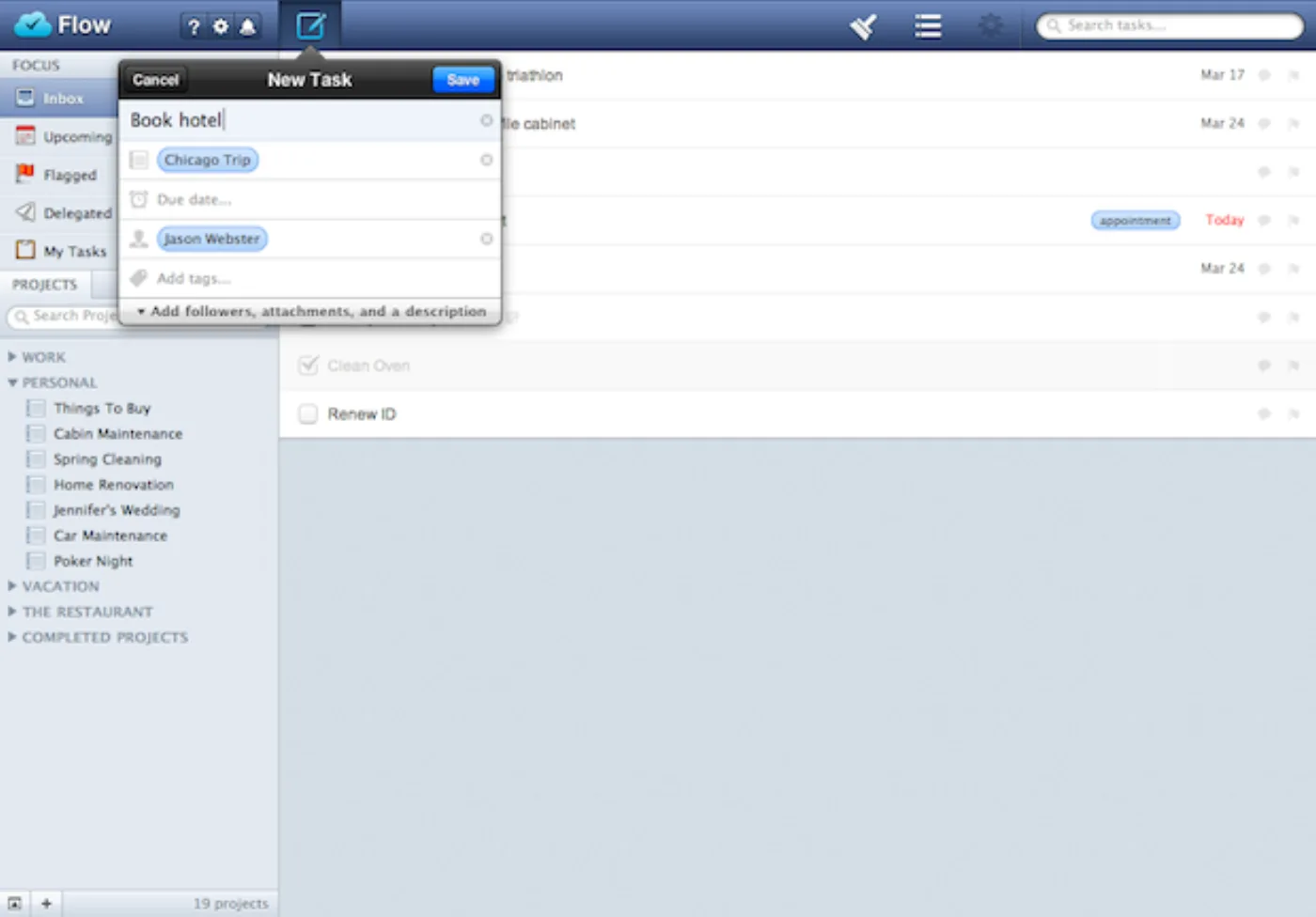
There was just one problem:I was consistently spending 2-3x our monthly revenue and losing money.And not venture capital. Out of my personal bank account.
只有一个问题:我一直在花费我们每月收入的 2-3 倍并且亏损。而不是风险投资。 从我的个人银行账户中取出。
I kept reassuring my then-CFO @_Sparling_.He was freaking out watching me burn so much money.I thought he was shortsighted:"We are going to make millions! Maybe billions!""You have to spend money to make money!""Once we launch this new feature, then everyone will see!"
我一直在安慰我当时的首席财务官@*Sparling*。他看着我烧了这么多钱,吓坏了。我以为他目光短浅:“我们要赚几百万!也许几十亿!”“你必须花钱才能赚钱!” “一旦我们推出这个新功能,那么每个人都会看到!”
Then I heard a name start popping up. Quietly at first, then a lot.Asana.
然后我听到一个名字开始弹出。 一开始很安静,然后很多。Asana。
It turned out that Dustin Moskovitz (@moskov), the billionaire co-founder of Facebook, was a fellow to-do list junkie, and he was quietly working on his own product.A few months later it went live.And I breathed a big sigh of relief.
原来,Facebook 的亿万富翁联合创始人达斯汀·莫斯科维茨 (@moskov) 是一名待办事项列表迷,他正在悄悄地开发自己的产品。几个月后,它上线了,于是我大大地松了一口气。
It was ugly! It was designed by engineers. Complicated and hard to use.Not a threat in the slightest.I felt validated:With a team a quarter of the size, and a fraction of the money, we had built what I felt was a superior product.
太丑了! 它是由工程师设计的。 复杂且难以使用。丝毫没有威胁。我觉得得到了验证:团队只有四分之一的规模和一小部分的钱,我们已经建立了我认为的优质产品。
Around this time, Dustin invited me for a coffee in San Francisco.He implied—in the nicest possible terms—that they were going to crush us.(Emphasis on nice, he is a very nice, humble dude. Both Dustin and @christianreber, my two key competitors, turned out to be mensches)
大约在这个时候,达斯汀邀请我去旧金山喝咖啡。他暗示——用最好的话说——他们会压垮我们。(强调一下,他是一个非常善良、谦逊的家伙。达斯汀和@christianreber ,我的两个主要竞争对手都是纯爷们)
He walked me through who was backing them, how much cash they had, how they had hired top executives from huge companies, and that it was only a matter of time until they beat us on product and outspend us on marketing.
他向我介绍了谁在支持他们,他们有多少现金,他们如何从大公司聘请高级管理人员,以及他们在产品上击败我们并在营销上超过我们只是时间问题。
I laughed!I was on the bootstrapping train. He was drinking Silicon Valley KoolAid.“Nice try!” I told him “let the games begin” and we left with a friendly handshake.
我笑了!我是在自驾游的火车上。他在喝硅谷的酷爱饮料。"不错的尝试!" 我告诉他 "让游戏开始",然后我们友好地握手离开。
Flow kept growing quickly, but our customers were demanding.They wanted an iPhone app.They wanted an Android app.They wanted an iPad app.They wanted a Mac app.
Flow 保持快速增长,但我们的客户要求很高。他们想要 iPhone 应用程序。他们想要 Android 应用程序。他们想要 iPad 应用程序。他们想要 Mac 应用程序。
Asana quickly released clients on all platforms.After all, they had a dev team 5x the size.Suddenly it was a key feature when people compared Asana and Flow side-by-side. Mobile was table stakes.We had to keep up.
Asana 迅速在所有平台上发布了客户端。毕竟,他们的开发团队规模是其 5 倍。突然间,当人们将 Asana 和 Flow 并排比较时,这是一个关键功能。 移动是赌注。我们必须跟上。
Almost overnight, our burn doubled.I continued to pound cash into the business. \$20k, \$40k, \$60k, \$80k, \$150k a month.For designers, more developers, more marketers, more office space.More everything.
几乎在一夜之间,我们的烧钱翻了一番。我继续向公司投入现金。 每月 2 万美元、4 万美元、6 万美元、8 万美元、15 万美元。对于设计师、更多开发人员、更多营销人员、更多办公空间。更多一切。
Until my bank balance couldn't keep up.We started almost missing payroll and rent.At one point in 2012 Chris even had to inject cash from his personal account so we wouldn’t miss payroll.It was terrifying.
直到我的银行余额跟不上。我们开始几乎缺少工资和租金。在 2012 年的某个时刻,克里斯甚至不得不从他的个人账户中注入现金,这样我们就不会错过工资。这太可怕了。
I started to realize how big a bet this was.I had no other investments outside of MetaLab, which was struggling at the time.At this point, I had invested millions of dollars, without even realizing it.Just continual weekly injections over the course of years.
我开始意识到这是一个多么大的赌注。除了当时陷入困境的 MetaLab 之外,我没有其他投资。此时,我甚至没有意识到已经投资了数百万美元。只是在几年的时间里持续每周注射一次。
Death by a thousand paper cuts.Then, Asana raised \$28 million and started pouring it into marketing.We didn’t do paid marketing, it seemed douchey and aggressive.We focused on organic growth....
然后,Asana 筹集了 2800 万美元并开始将其投入到营销中。我们没有进行付费营销,这似乎是愚蠢和激进的。我们专注于有机增长...…
Until that point, we had just just done Field of Dreams marketing:“If you build it, they will come”But I wasn't Jason Fried. In my opinion, one of the best marketers of our generation.My blog posts barely made a dent. I didn't understand marketing.
在那之前,我们刚刚完成了梦想领域的营销:“如果你建造它,他们就会来”但我不是杰森弗里德 —— 我们这个时代最好的营销人员之一。我的博客文章几乎没有留下任何痕迹。 我不懂营销。
We were a fart in the wind.Suddenly, Asana ads were everywhere.Billboards. Bus stops. Conferences. Airports. Google. Facebook. Capterra.
我们的营销像是在风中放屁。突然,Asana 广告无处不在。广告牌。 巴士站。 会议。 机场。 谷歌。 Facebook。 卡普特拉。
Even OUR OWN Google keywords were plastered with “Asana vs. Flow” paid links.We started burning money on ads and hiring sales people just to keep a toe hold, but mostly we focused on making the product better than theirs.Our one remaining advantage.
甚至我们自己的 Google 关键字也贴满了“Asana vs. Flow”付费链接。我们开始在广告上烧钱并雇用销售人员,只是为了保持基本面,但主要是我们专注于使产品比他们的更好 —— 这是我们剩下的唯一一个优势 .
But our product was suffering…In order to stay competitive, we had underinvested in our engineering team due to cash constraints and stretched them across mobile, desktop, and web.We started to get an endless stream of bug reports from our customers.
但是我们的产品正在遭受流失……为了保持竞争力,由于现金限制,我们对工程团队的投资不足,并将他们扩展到移动、桌面和网络。我们开始从客户那里收到源源不断的错误报告。
Our growth started slowing.20% monthly growth dropped to 5%.Customers weren’t getting the features they wanted.Our clients were unreliable and had syncing issues.Our team felt frustrated and under resourced and we churned through staff.
我们的增长开始放缓。每月增长 20% 下降到 5%。客户没有得到他们想要的功能。我们的客户不可靠并且存在同步问题。我们的团队感到沮丧和资源不足,我们通过员工流失。
We had to hit pause and spend years—literally years—rewriting all of our clients, only to emerge on the other side to see….
我们不得不暂停并花费数年——实际上是数年——重写我们所有的客户,结果却在另一边看到……
Asana had hired designers.At first, a tiny little team. Nothing to worry about.But after a year or two, they started hiring a huge team of incredible people.One day I woke up to see that Asana had fully relaunched. Their marketing site looked…great.Better than ours...
Asana 聘请了设计师。起初,是一个很小的团队。 没什么好担心的。但是一两年后,他们开始雇用一支由专业人士组成的庞大团队。有一天我醒来发现 Asana 已经完全重新启动。 他们的营销网站看起来……很棒。比我们的更好……
Their new app, while not perfect, had all the features we wished we had time to make, worked on more platforms and most importantly was fast and not buggy.By this point, we were burning over \$150,000 per month.
他们的新应用程序虽然不完美,但拥有我们即将做的所有功能,可以在更多平台上运行,最重要的是速度快且没有错误。到那时,我们每月花费超过 150,000 美元。
Chris was tearing his hair out and pointed out that we had burnt through something like \$5MM with no end in sight.Still, we powered on for YEARS. We even doubled down and raised money—too little too late—from some friends of mine.
克里斯正在扯他的头发,并指出我们已经烧掉了大约 5MM 美元,而且看不到尽头。不过,我们已经支持了好几年。 我们甚至加倍投入并从我的一些朋友那里筹集到资金——太少太晚了。
We decided that we didn’t need to “own that market”.We could just have a small slice of pie. We focused on base hits.
我们决定我们不需要“拥有那个市场”。我们可以只占一小块馅饼。 我们专注于基本面中。
For a while, that looked like an OK strategy.Our revenue growth slowed, we kept on growing.Until one day it didn’t.
有一段时间,这看起来是一个不错的策略。我们的收入增长放缓,我们继续增长。直到有一天基础的增长消失了。
Churn caught up with us, customer acquisition cost became unprofitable (Asana and others could afford to spend way more due to higher customer lifetime value), bugs continued to dominate our time, and Asana and others kept making their product better.
客户流失赶上了我们,客户获取成本变得无利可图(由于更高的客户生命周期价值,Asana 和其他人可以承担更多的支出),修复产品缺陷继续占据我们的时间,Asana 和其他人不断改进他们的产品。
One day recently, I looked at Asana and it slapped me in the face:It’s better.Their marketing is better.Their product is better.Their features are better.Their enterprise support is better.Their integrations are better.They won. We lost.
最近有一天,我看着 Asana,它打了我一记耳光:更好。他们的营销更好。他们的产品更好。他们的功能更好。他们的企业支持更好。他们的集成更好。他们赢了。 我们失去了。
12 years and over \$10MM+ lit on fire, we are are done burning money in a losing battle. We give up.The writing is on the wall. Dustin was right.We lost the war, due to inexperience, product myopia, and a lack of capital in a highly capital intensive and competitive space.
12 年和超过 \$10MM+ 着火了,我们已经在一场失败的战斗中烧钱了。 我们放弃了。写在墙上。 达斯汀是对的。我们输掉了这场战争,原因是经验不足、产品短视以及在高度资本密集和竞争激烈的空间中缺乏资金。
Today, Flow is a shadow of its former self.We’ve were forced to downsize it to breakeven and shifted to a team based in India led by my friend @mohitmamoria to keep our remaining customers happy.
如今,Flow 已成为其前身的影子。我们被迫缩小规模以实现盈亏平衡,并转移到由我的朋友 @mohitmamoria 领导的印度团队,以让我们剩余的客户满意。
It’s a business that has to spend less than it makes and focus on making its customers happy.We aren't fighting Asana anymore.This is a very expensive slice of humble pie.And we are holding our noses and wolfing it down.
这是一家必须花费少于其收入并专注于让客户满意的企业。我们不再与 Asana 战斗。这是一块非常昂贵的不起眼的馅饼。我们正捂着鼻子狼吞虎咽。
At its peak, Flow did about \$3MM of ARR.Today it’s sitting at about \$900k ARR, breakeven, with a low growth rate.
在巅峰时期,Flow 的 ARR 约为 3MM。如今,它的 ARR 约为 90 万美元,盈亏平衡,增长率较低。
Sure, it could turn into something, but I will never make my investment back and barring a miracle, it will never own a large chunk of the productivity market.
当然,它可能会变成某种东西,但我永远不会收回我的投资,除非出现奇迹,它永远不会成为生产力市场的主流。
In retrospect, we were like Fiji waging war on the United States with a collection of AK-47s and speed boats vs. artillery and aircraft carriers.We got obliterated. Obviously.Looking back as a more mature entrepreneur, this was inevitable...
现在回想起来,我们就像斐济用AK-47和快艇与大炮和航空母舰的集合向美国发动战争。我们被抹杀了。很明显。作为一个更成熟的企业家回头看,这是不可避免的...…
VCs, friends—heck, my own business partner—all walked me through all of this, but it took years to sink in.It was a slow 12 year train wreck.A thousand paper cuts, driven by my complete inexperience and incompetence on my part.
风险投资人、朋友 —— 呃,我自己的商业伙伴 —— 都陪我经历了这一切,但它花了很多年才沉淀下来。这是一个持续了的12年的火车失事事故。我们浪费了太多钱,这全是由我完全没有经验和无能的部分驱动。
The absolute worst part about this is that a team of incredibly smart people, many of whom have become good friends, worked on a company—some of them for a decade or more—that didn’t turn out.
这绝对是最糟糕的部分是,一个由令人难以置信的聪明人组成的团队,其中许多人已经成为好朋友,为一个公司工作 —— 其中一些人工作了十年或更长时间 —— 但却没有结果。
A huge thank you to all of the people who worked on Flow over the past decade, I owe you all, big time.I'm so sorry it didn't work out the way we had hoped and the responsibility falls squarely on my shoulders:
我非常感谢过去十年中为Flow工作的所有人员,我欠你们所有人,非常感谢。我很抱歉,它没有按照我们希望的方式进行,责任完全在我的肩上。
I think that failure is the best teacher.But better than failing is getting to learn by reading about my failures in a tweet instead of losing \$10MM yourself.
我认为,失败是最好的老师。但比失败更好的是通过阅读我在推特上的失败经历来学习,而不是自己失去10MM美元。
In this instance, I learned a lot.The key takeaways are:
1. If you are in a competitive VC-funded space, it’s foolish to compete without raising money. Don't bring a knife to a gun fight.
2. The best product doesn’t always win, and product is not a longterm competitive advantage.
3. If a tree falls in the forest and nobody is around to hear it, it didn’t fall.
4. Every developer in the world wakes up thinking “I should build a to-do list app” and people love jumping between productivity apps and workflows. There is no moat in productivity—avoid it if you can.
5. Running a SaaS business without deeply understanding churn, LTV, CAC etc, is like flying a plane without instrumentation—really stupid and dangerous.
6. Failure sneaks up on you slowly, then all at once.
7. R&D is EXPENSIVE. Especially when competing with venture.
8. If you’re competing on features, it never stops and is an ever-increasing line item.
9. Good product with great marketing beats amazing product with no marketing.
10. Bootstrapping works best in uncompetitive spaces/niches or if you have an unfair advantage (a personal brand, unique customer acquisition channel, etc).
在这个例子中,我学到了很多,这里是一些关键收获:
1. 如果你在一个竞争激烈的风险投资领域,不筹集资金就去竞争是愚蠢的。不要带着刀去枪战现场。
2. 最好的产品并不总是赢家,产品并不是长期的竞争优势。
3. 如果一棵树在森林中倒下,而周围没有人听到,那么它就没有倒下。
4. 世界上的每一个开发者醒来时都在想 "我应该建立一个待办事项列表应用程序",人们喜欢在生产力应用程序和工作流程之间跳跃。生产力没有护城河--如果你可以的话,请避开它。
5. 在没有深入了解流失率、LTV、CAC等的情况下经营SaaS业务,就像在没有仪器设备的情况下驾驶飞机一样,非常愚蠢和危险。
6. 失败会慢慢地向你袭来,然后一下子发生。
7. 研发是昂贵的。特别是在与风险企业竞争的时候。
8. 如果你要在功能上竞争,它永远不会停止,是一个不断增加的项目。
9. 好的产品加上出色的营销,胜过没有营销的出色产品。
10. 启动一个新项目,在没有竞争的空间/领域,或者你有独特的优势(个人品牌、独特的客户获取渠道等)时效果会更好。
The best way to learn is to walk around sticking forks in electrical sockets and adjusting accordingly.This one hurt. A lot.I'll try to keep sharing my screw ups as they happen.Follow me at @awilkinson.